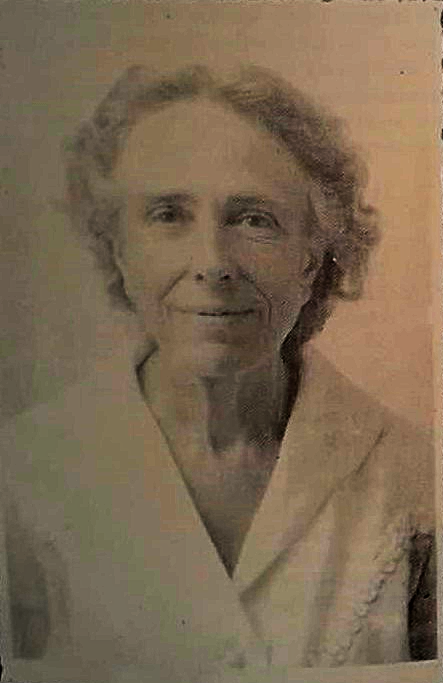
Dorothea Hughes Simmons

portrait of Dorothea HUghes Simmons
Dorothea Hughes Simmons
Photographer and Date Not Known
from Dorothea Highes Simmons: A Biography
No copyright, Public Domain

Dorothea Hughes Simmons (1891-1962) was a remarkable woman who spent her life and her fortune helping others, mainly in Greece, Poland and Jamaica. She is remembered in Horsham for her association with Dorothea Simmons Elementary School.

Mrs. Simmons, in 1932, donated land on Limekiln Pike for the 4 room schoolhouse – expanded in the 1950s – now known as Limekiln Simmons. The current Dorothea Hughes Simmons Elementary School on Babylon Road was opened in 1992. The original school was then used for a Montessori and then briefly as a Kindergarten.

Dorothea Hughes was a member of the Society of Friends, a nurse, teacher, organizer and philanthropist. She sponsored The Warsaw School (for nursing) in Poland, worked at and supported the American Farm School in Thessalonika, Greece and helped start Friends College in Highgate, Jamaica.

Apart from her generous donation for the school in Horsham, we don’t know much about her time here. The Ambler Gazette (4/20/1933) reported that she purchased what had been the Anderson Farm in Prospectville after WWI. Arthur Bertholf, whom she had met in Greece, settled on one of these farms with his family. Arthur’s son (William, a member of Horsham History) was born in France in 1926 (Willam Bertholf Obituary ) so the family settled here shortly after. Bill passed away in 2018 before we started research on this article.

Charles Harper Smith, writing in 1937, mentions the Simmons’ property multiple times but only in reference to previous owners of the land. Dorothea had married Jamaican cattle rancher David Simmons in 1929 and then spent most of her time in Jamaica.

If anyone has more information on Mrs Simmons and her time spent in Horsham, we would love to hear from you. Contact us at hpha@horshampreservation.org.

Dorothea Murray Hughes

Dorothea Murray Hughes was born in Milton, Massachusetts on September 13, 1891, the daughter of Sarah Forbes (1853-1917) and William Hastings Hughes (1833-1907). Sarah Forbes was the youngest daughter of John Murray Forbes (JMF) and Sarah Swain Hathaway Forbes, and became a convert to the Society of Friends (Quakers). Her brother, Walter Scott Hughes, was three years older. (Hughes p1 )

Public service and philanthropy were prominent on both sides of her family.

John Murray Forbes

Sarah’s grandfather, Ralph, married Margaret Perkins, of the Boston trading family Perkins & Company. JMF and his brothers worked with their uncle, Thomas Handasyd Perkins, trading goods such as silver, furs and opium for Chinese tea. In Hong Kong JMF developed a strong relationship with a Chinese merchant named Howqua who put up $200,000 in capital for Forbes to invest in American railroads. From 1846 through 1855 he was president of Michigan Central Railroad, and a director and president of the Chicago, Burlington and Quincy Railroad, helping to grow the American Midwest. (Forbes 1)

In 1847, JMF and his brother, Captain Ben Forbes, abolitionist/poet John Greenleaf Whittier, Boston Mayor Josiah Quincy, Jr. and others helped found the New England Committee for the Relief of Ireland and Scotland. The brothers proposed to outfit an idle warship, the USS Jamestown, to transport relief to those suffering from the Great Famine. This was approved by Congress and President James Polk and in a month the ship, captained by Ben Forbes, sailed to Cork with more than 8,000 barrels of supplies. Captain Forbes detailed his mission in a report to the Committee called “the Voyage of the Jamestown on Her Errand of Mercy.” This was the first of over 120 ships that would bring food and funds to the people of Ireland and Scotland over the next several years. (Forbes 2)

Although Perkins & Company had been prominent in the Haiti slave trade, JMF was an ardent abolitionist and served as the chairman of the Republican National Committee during the administration of President Abraham Lincoln. He and Governor John Andrew of Massachusetts preemptively published and distributed copies of the Emancipation Proclamation to Union troops for fear that Lincoln might not issue it.(Forbes 1) He supplied money and weapons to New Englanders to fight slavery in Kansas and in 1859 entertained abolitionist John Brown.(Wikipedia: Forbes)

Forbes also traveled to London during the US Civil War to meet abolitionist leaders Jeanie Elizabeth Hughes and her brother Thomas. Thomas Hughes was the author of the autobiographical novel Tom Brown’s Schooldays, a Christian Socialist, proponent of cooperativism, and later liberal politician. (Hughes p1 )

Jeanie Elizabeth Hughes Senior

Dorothea’s aunt Jeanie Elizabeth Hughes Senior was an abolitionist, relief worker, and philanthropist. She worked with the new National Society for Aid to Sick and Wounded in War (which became the English Red Cross in 1905), and was the first female civil servant in England, tasked with reporting on impoverished girls. This eventually led, in 1876, to Senior and others creating the Metropolitan Association for Befriending Young Servants (MABYS), to habilitate institutionalised and vulnerable girls in London. (Wikipedia: Senior) It was at Jeanie Senior’s famous soirées of Christian Socialists, Pre-Raphaelite and Symbolist artists, and Victorian feminists in 1874 that Sarah likely met her future husband, W. Hastings Hughes, Jeanie’s youngest brother who lived with his four children in her household. (Hughes p1 ) Hastings, who was widowed in 1864, was a wine importer. They were married in 1887. (Massachusetts History )

Jeanie was also a friend of Mary Ann Evans and was said to be the inspiration for the character Dorothea in the novel Middlemarch which Evans wrote under the pen name George Eliot. Sarah named her daughter after the character. (Hughes p2 )

Sarah Forbes Hughes

Sarah Forbes became a Quaker and was likely an influence on her daughter’s being a Friend. She wrote several books and edited “Letters and recollections of John Murray Forbes”. (HathiTrust )She had intended to write a biography of Jeanie but encouraged Dorothea to do it instead. Memoir of Jane Elizabeth Senior by Dorothea Murray Hughes was published in Boston in 1916. (Hughes p1 )

A vintage, sepia-toned photograph of three people relaxing on a wooden porch. On the left, a young Dorothea Hughes in a short-sleeved dress sits in a wicker rocking chair, holding knitting needles and yarn. In the center, her mother Sarah Forbes Hughes looks gently downward. On the right, a young Julian Huxley wearing a suit and bow tie sits with a book on his lap, extending his right hand to pet a large, fluffy dog , positioned in the foreground.
Left to right: Dorothea Hughes (1891-1952), her mother Sarah Forbes Hughes (1953-1917), and the evolutionary biologist Julian Huxley, summer of 1916. Photo is likely taken by Walter S. Hughes (1888-1953), Sarah’s other child and aquaintance of Huxley, who was at the Woods Hole Marine Biological Lab (see his Memories p. 108) in the summer of 1916. Photo is on the front porch of Mansion House, Naushon Island. Used with permission of Arthur Hughes.

W Hastings Hughes died in 1907 and Sarah Hughes in 1917. Her cousin (Massachusetts History ), Amelia Forbes Emerson said Sarah’s death caused “a complete and drastic change … in Dorothea’s life”. (DHSB p3-4 )

After her mother’s death in 1917 Dorothea took a nursing course in New York and was a nursing assistant in Washington, D.C., where her brother Walter was doing wartime research on antidotes to mustard gas for the Army. She graduated from the Army School of Nursing in June 1921. After getting her RN she worked for the Harvard Pathology Labs under William T. Bovie, who had hired Walter as a researcher and lecturer in biophysics. (Hughes p2 )

Red Cross Nursing School, Warsaw Poland

After World War I, Ms Hughes received an appeal from a Polish couple she had met in Boston, musicians Ignacy and Helena Paderewski (Witkiewicz ), for help in setting up nursing services in Poland. In 1920 she offered the American Red Cross $10,000/year for 3 years to set up a school of nursing in Poland. (DHSB p5 ) Other sponsors of the program were the American Red Cross, the Rockefeller Foundation, the Polish Red Cross, the Ministry of Health, and the University of Warsaw Faculty of Medicine (Witkiewicz ). This became known as “The Warsaw School”. An American nurse who visited in 1931 said it was the “best example of American ideals in nursing education”. (DHSB p4 )

Dorothea Hughes was an unassuming woman, and …when she first appeared at Red Cross headquarters in Washington
some officials were not inclined to take seriously the generous offer.”


Florence Mae Smith (DHSB p4 )

Dorothea was not directly involved with the operation of the school but maintained a correspondence with the director. She continued her financial support until 1928 when the American Red Cross turned over administration of the school to the Polish Red Cross. (DHSB p4 ) The Rockefeller Foundation, in 1922, pledged $100,000 for a dedicated building for the school and this was opened in 1929. (Witkiewicz )

This building was used for Polish Soldiers in 1939 and remained Polish until it was closed by the Germans in October 1944. The Soviet installed government did not re-open the school but allowed a new school to open in Gdansk in September 1945. The Warsaw School has never retured to Warsaw but graduates of the school in Gdansk still receive certificates from the Warsaw School. (Witkiewicz )

While in Greece in the mid 1920s, Hughes traveled to Poland to “..receive the highest decoration which that country could give to a foreigner and civilian.” (DHSB p5 ) “

Society of Friends

Dorothea’s mother, Sarah, had become a Quaker at some point so Dorothea may have converted at the same time. Her brother, Walter, did not. According to his son Arthur: “Walter did not share Dorothea’s Quakerism, having a materialist understanding of the world, adhering to scientism, and as an atheist in the way of his friend and fellow scientist Julian Huxley…. (but) from early on helped his sister in all things mathematical and scientific, tools she needed in nursing and in her philanthropy.” (Hughes p2 )

Her English cousin Mary (May) Hughes was also a Quaker and was likely her connection to the London Yearly Meeting. May was the daughter of Thomas Hughes and ran a settlement house called the Dew Drop Inn in East London. (Hughes p3 ) By 1923 Dorothea had joined a team of English Quakers from the London Yearly Meeting in their mission to help Greek refugees in Thessaloniki.

American Farm School, Salonica, Greece

The Thessalonica Agricultural and Industrial Institute, or American Farm School, was founded in 1904 by Dr John Henry House and his wife Susan Adeline House. (American Farm School ). Dorothea Hughes joined a group of Friends from England in 1923/4 to help in the villages around Thessalonica following the Greco-Turkish War (1919-22). She “used her nurse’s training and skill to relieve the suffering. She travelled through the villages, walking, on horse back, or mule back, scrubbing, cleaning, nursing the sick, bathing them, and feeding them” (DHSB p6 )

Arthur Bertholf, who would later settle his family on land that Dorothea had bought in Horsham, PA was in charge of the village work being done by the Friends and was so overwhelmed that Dorothea took over his teaching responsibilities “..and for a number of years she was one of the most faithful and inspiring teachers the school has ever had. ” One of her innovations was a program to teach math based on farm economics. (DHSB p7 ).

Teachers at the school were given one group of students to work with through graduation, Ms Hughes’group was the class of 1927. She asked the boys what they aspired to, and upon graduation she told them the “means had been found” to help them fulfill their dreams. Several went to colleges in the US and hrought their new knowledge back to Greece. (DHSB p7-8 )

Dorothea also, through the Friends, funded a scholarship program to allow boys to attend the American Farm School.

The seeds which Dorothea Hughes Simmons planted so quietly and unobtrusively are bearing rich fruit and will continue to be a blessing to many people. She planted so quietly that many have never known who was responsible for the help they received. She believed in giving as Christ taught us, “When thou doest alms, let not thy left hand know what thy right hand doeth.” And she has received her reward in the love of her friends, the relief of the suffering, the spread of knowledge, but, greater than all these, must have been the welcome of her Master.


Charles House, son of the founder of the American Farm School – DHSB p9

Horsham?

The Ambler Gazette (4/20/1933), when reporting on naming the school that was built on the land Dorothea donated mentions that she purchased it after World War I (we’ll have to do a property search some day). She is reported to have taken courses in New York after her mother’s death in 1917, worked as a nursing assistant in Washington, graduated from Nursing School in 1921 and then going to work with her brother at Harvard. By 1924 she was in Greece where she stayed until 1927 according to her nephew Arthur.

A website, Horsham1.com, which we accessed a long time ago and is no longer accessible, mentions that Dorothea purchased “three farms in Prospectville between Limekiln Pike and School House/Cedar Hill Road in 1926. The Arthur Bertholf family settled down on one farm with cows, chickens, corn, wheat and horses.”

Arthur Bertholf, her colleague from Greece, had a son William who was born in Lyon, France in February, 1926. The Ambler Gazette of September 1 and 22, 1927 reports that Miss Dorothea Hughes, of France, was visiting the Bertholfs in Prospectville and that she would be returning to France shortly. In 1929 she was taking a steamship from England to Jamaica when she met her furture husband, David Simmons. She apparently made her home in Jamaica for the next 23 years although the Gazette of 1933 reported that she would stop occassionally in Horsham on her way to her summer home in Massachusetts.

So we know that she visited our little township at least once in 1927 but its still a mystery – to us anyway – how she discovered Horsham, decided to buy land here, and what other ties she may have had to the area.

Jamaica

By 1929 Dorothea had made her way back to England and sailed from there to Jamaica. On board the ship she met cattle rancher David Simmons. Simmons was “an emaciated figure” (Hughes p4 ), having been badly injured in Gallipoli during WWI. Dorothea became his nurse and wife in August, 1929. They moved to “Castle Daly” in Walker’s Wood, Jamaica.

In my family, the marriage was considered unfortunate. Uncle David was a stuffy, racist, colonial- minded, impersonal figure, the opposite of Dorothea. He belittled her many efforts working with poor Jamaicans. My one recollection of him was his sitting on the porch of Mansion House fondling his beloved cigar.


Arther Hughes, nephew of Dorothea Hughes Simmons p4

The Jamaican economy, in 1929, was agricultural but most people either worked small, often rented, plots or worked in unskilled positions for others. Making a living was very difficult.

Mrs. Simmons started a number of projects to help the local people become more self-sufficient. These included the wool co-op where she encouraged families to raise sheep and send the wool to Friends’ Craft Industries in Highgate. She also started a workshop to teach boys to become furniture makers.

A much more ambitous project was the establishment of a cooperative farm in St Mary. Dorothea purchased land for a settlement that later became Friends’ Town and all the farmers have paid for their land

Deeds Not Words

Dorothea’s cousin Her cousin (Massachusetts History), Amelia Forbes Emerson, in the biography, described her:

Dorothea was a consistent person. In her personal life she was plain to the point of austerity. Although she inherited a fortune she spent practically none of it upon herself. She lived completely simply, usually travelled second class, dressed inconspicuously, and made no concessions to the current fashions. It was deeds, not words, which counted with her; she abominated sham and hypocrisy and never indulged in uplift talk. She may never have talked about her religion, but she lived a life of devotion to others, a life of self sacrifice and cheerfulness.

Mrs Simmons died at her home, Castle Daly, Walker’s Wood, Jamaica on November 26, 1962 and is buried in the Friend’s Cemetery, Highgate, Jamaica.

Horsham’s Memorial School (Ambler Gazette 4/20/1933 pg 8 col 1)

The Ambler Gazette of April 20, 1933 reports on the opening of the new Simmon’s Elementary:

The new public school of Horsham township at Prospectville will be known as the “Dorothea Simmons Public School,” and bronze tablets are being cast to mark the building. The unveiling of these and dedication of the structure will mark the formal opening of the new building at a date to be designated later in the spring -probably in May.

Mrs. Simmons donated the 10 acres of land upon which the building stands. It was a part of the former Thomas B. Anderson farm, and was purchased by her after the World War. Later on she married an English citizen, and now makes her home in Jamaica, although she at times passes through this section, as her summers are spent in Massachusetts.

She is a granddaughter of Thomas Hughes, of England, author of “Tom Brown’s School Days” and “Tom Brown at Rugby,” both well-known publications, classics for young men. When Mrs. Simmons donated the ground she let it be known that while primarily it is for educational purposes, yet it is for community uses in the broadest sense and for athletic purposes, evidently leaving it to the school board to work out the details of widest community uses within the broadest interpretation of the provislons of the gift.

Simmons Elementary School

Dorothea Simmons Public School opened as a 4 room schoolhouse in 1933 as per the Gazette. According to the Patch it was expanded in the 1950s and renamed Simmons Elementary School. The current Simmons Elementary School on Babylon Road was opened in 1992. The old building was used as a Montessori and then for several years as a Kindergarten (My daughter attended Montessori there in 2000, the Kindergarten was opened in 2001 and she returned for that in 2002. The Kindergarten center lasted only a couple of years due to a population bubble of children that ebbed. The building was closed in 2011. The HHSD has been trying to sell the property but is involved in a law suit over the status of the property as a gift by Mrs Simmons to be used for educational purposes.

References

  1. Forbes, RR, “Forbes Family of Boston”, retrieved from https://www.clan-forbes.org/post/forbes-family-of-boston July 28, 2026
  2. Forbes, RR, “Captain Ben Forbes & the Errand of Mercy” https://www.clan-forbes.org/post/captain-ben-forbes-the-errand-of-mercy July 28, 2026
  3. Hughes, Arthur “Dorothea Hughes Simmons” unpublished.
  4. The Ambler Gazette 19330420. (1933). page 8 col 1. Retrieved from https://digitalarchives.powerlibrary.org/papd/islandora/object/papd%3Awivp-gazett_18917
  5. The Ambler Gazette 19270901. (1927) page 4 col 4. Retrieved from https://digitalarchives.powerlibrary.org/papd/islandora/object/papd%3Awivp-gazett_18917
  6. The Ambler Gazette 19270922. (1927) page 5 col 3. Retrieved from https://digitalarchives.powerlibrary.org/papd/islandora/object/papd%3Awivp-gazett_18917
  7. Dorothea Hughes Simmons: A Biography, (DHSB) undated, HC.BM.B349.08.013 (1116/Box HW-51), Box: 27. Baltimore Monthly Meeting (Homewood) Records, QM-B-B349. Quaker Meeting Records at Haverford College Quaker & Special Collections and Friends Historical Library of Swarthmore College. Transcription at HPHA Library
    We were sent another copy of this biography which shows it was originally published by the Education Committee of The Jamaica Yearly Meeting of Friends. No date on either version.
  8. Ciliberto, Nino “Old Limekiln School Property Sale Fight Not Over, Residents Say” Patch,Hatboro-Horsham 26 Sep 2024 Retrieved from:https://patch.com/pennsylvania/horsham/old-limekiln-school-property-sale-fight-not-over-residents-say
  9. Smith, Charles Harper (1975) The Settlement of Horsham Township Trinity Press, Ambler, PA ISBN:-0-912046-11-2 (HPHA Library)
  10. The Public Spirit – week of June 23-29, 1932 retreived from https://patch.com/pennsylvania/horsham/this-was-hatboro-horsham-1932-53dc910b January 10, 2026
  11. William A Bertholf Obituary, retreived from https://www.legacy.com/us/obituaries/name/william-bertholf-obituary?pid=188788789 January 9, 2026
  12. Ancestry.com: William Hastings Hughes, retreived from https://www.ancestry.com/genealogy/records/william-hastings-hughes-24-19qxfz January 9, 2026
  13. Massachusetts Historical Society: Edith Emerson Forbes and William Hathaway Forbes Papers and Additions, retreived from https://www.masshist.org/collection-guides/view/fa0225 January, 9, 2026
  14. Helena Witkiewicz,”Warsaw Nursing School”, Virtual Museum of Polish Nursing (Wirtualne Muzeum, Pielegniarstwa Poskiego), retrieved from https://wmpp.org.pl/en/the-warsaw-nursing-school/ January 12,2026
  15. American Farm School, History, retreived from https://afs.edu.gr/en/american-farm-school/school/#history January 12, 2026
  16. HathiTrust: Letters and recollections of John Murray Forbes https://catalog.hathitrust.org/Record/100322769
  17. Wikipedia: Jane Senior https://en.wikipedia.org/wiki/Jane_Senior
  18. Wikipedia: John Murray Forbes https://en.wikipedia.org/wiki/John_Murray_Forbes
  19. HORSHAM TIME LINE – Horsham1.com – Accessed 2008, no longer avaialable by 2014

Join us to preserve the history of Horsham