
Archibald McLean
- By:
- Kevin Winters
- Published:
- October 23, 2023
- Updated:
- January 15, 2026
|
|
|
|
|
|
The early history of Horsham boasts two men of some renown named Archibald McClean.
Archibald McLean Sr
“The senior Archibald McLean was for sixteen years a justice of the peace in Horsham, and in 1772 was elected to the Pennsylvania Assembly. He died December 1, 1773, in his seventy-fifth year, having resided in the same place for forty years. He was buried in the graveyard attached to Abington Presbyterian Church. On the list of 1776 we find his estate rated at 220 acres.” (Bean p877 ) Craven also reports that McLean was a “noted Judge fo the Court of Quater Sessions of Philadelphia County”. (Craven p28 )
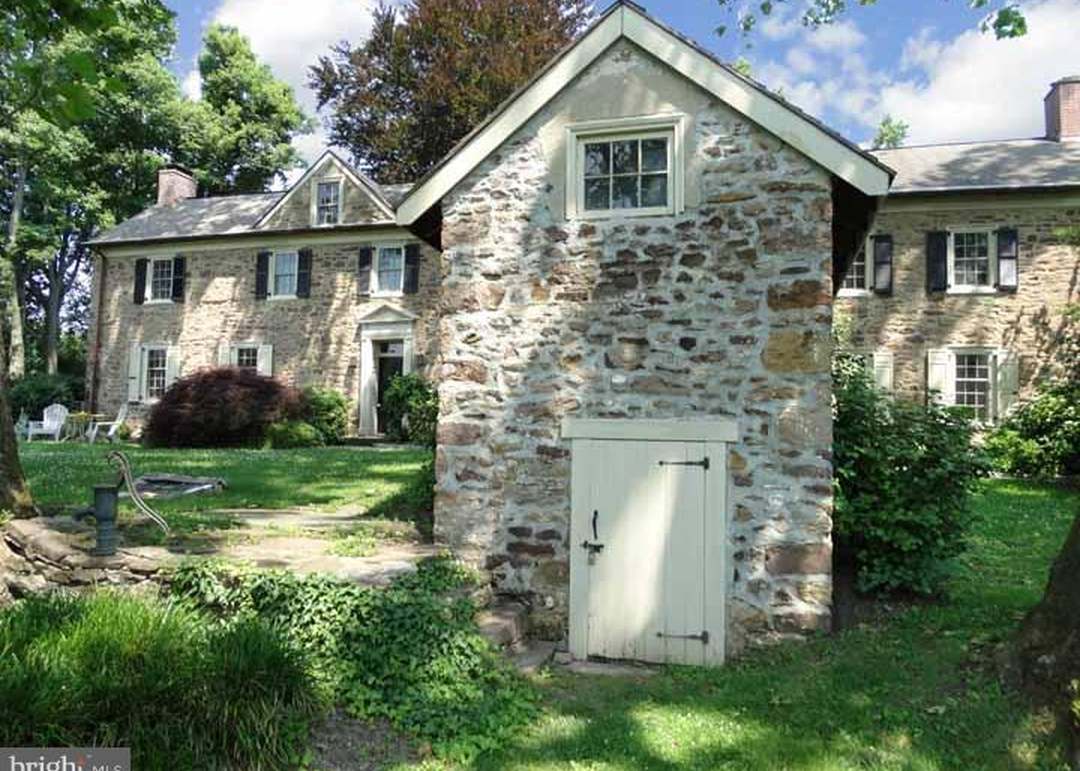
This very large stone farmhouse on the south side of Babylon Road East of Limekiln Pike, was built by Archibald McClean about 1773 for his daughter Mary and her husband, Colonel Robert Loller. The house and 63 acres were sold to Loller in 1779 by his brother-in-law Dr Archibald McLean (see below). It remained his residence until he moved to Hatboro in 1795. (Smith- need page # )
This property is now a private residence.
Dr. Archibald McLean
“Dr. Archibald McClean, a distinguished physician, was a son of the aforesaid, educated at Princeton College, surgeon in the Revolutionary army, and in January, 1783, was appointed surgeon of the First Battalion of Philadelphia County militia. This year he also became a member of the Hatboro’ Library. He was a noted wit, a poet and a man of extensive acquirements, and possessed a very large medical practice- through Horsham, Upper Dublin and Whitemarsh townships at the time of the Revolution. (Bean p 639 ) It is said he was six feet six inches in height, a lover of strong drink and a free thinker. In attempting to cross the Wissahickon in a high freshet at the present town of Ambler on horseback, he was drowned, May 13,1791, leaving a widow and four children. He resided near the centre of the township, adjoining his father’s place. His writings and family record were accidentally destroyed by a fire about eighteen years ago [note c1864]. Descendants of the family still reside in the vicinity.” (Bean p877 )
Elizabeth Graeme Fergusson’s dog Fidele died around 1790 and “..Elizabeth buried him with all honors,erecting a stone in his memory, and inviting residents of Graeme park to attend his funeral. Neighbor Dr Archibald McLean heard of the event and sent her a satirical epitaph to Fidele. Elizabeth replied with an anonymous ‘Epitaph on Dr Archibald McLean’ who was six and a half feet tall and enjoyed his grog and jokes at Widow Jenkin’s tavern in Jenkintown.” William Penrose, in 1854, was still able to point out where Fedele had been buried. (Bean p361 )
Her poem went on for 22 lines satirizing McLean, ending with:
“Perhaps may wish a conscience nice
had guided him while here.”
McLean defended himself and consigned his correspondent after death to a state between heaven and hell where:
“If he no pleasure knows when gone
no pain can he endure.”
(Ousterhout – need page )